
INDIVIDUAL THERAPY IN CHICAGO & ONLINE IN ILLINOIS
Therapy for all the different parts of you.
There's a lot that goes into being a person. Your relationships, your upbringing, the expectations you've carried, the things you've been through, and the ways you've learned to cope.
Individual therapy at Mun & Mind is a place to make sense of it all, at your own pace, with someone who's genuinely interested in understanding you.

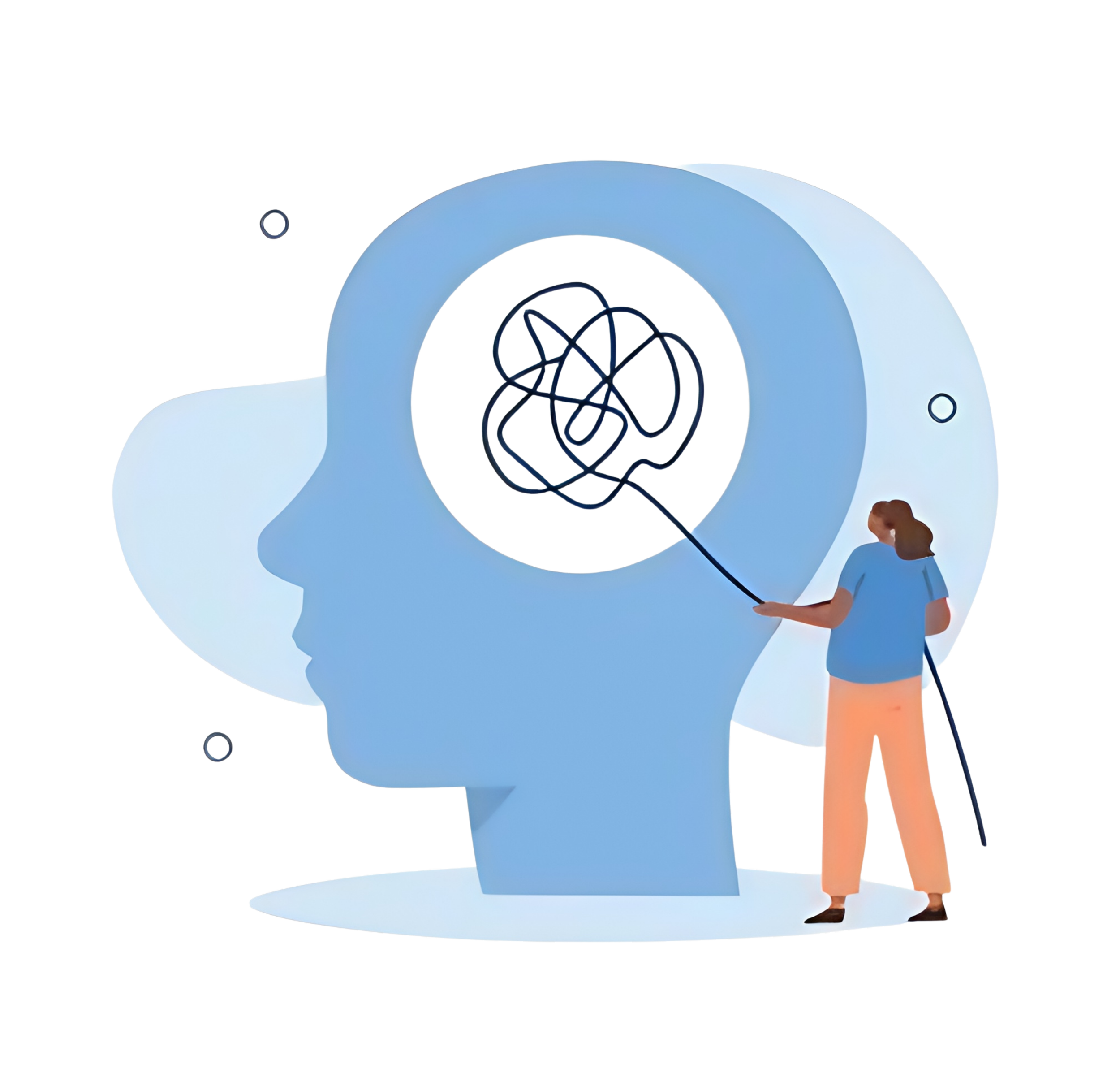
We start with getting to know you.
Some people come to therapy with something specific they want to work on. Others know they've been feeling off for a while but aren't entirely sure why.
Both are perfectly good places to begin.
Your therapist will work with you to understand what's happening in your life, notice patterns, and explore what might be helpful. That could mean processing experiences from your past, developing new ways to manage anxiety, or figuring out how to approach a relationship differently.
It's collaborative, and it should feel like a conversation. You bring your experiences; your therapist brings clinical knowledge, curiosity, and a perspective you might not have considered before.

What we can explore together.
01 / Anxiety & overthinking Explore this topic
Anxiety isn't always obvious. Sometimes it looks like constant planning, replaying conversations, struggling to make decisions, or feeling responsible for keeping everything under control.
In therapy, we can explore what your anxiety is responding to, the patterns that keep it going, and ways to approach uncertainty differently. That might involve practical coping strategies, recognizing anxious thought patterns, or understanding how past experiences have shaped your relationship with worry.
02 / Depression & disconnection Explore this topic
Depression doesn't always mean feeling sad. It can show up as exhaustion, irritability, losing interest in things you once enjoyed, or feeling disconnected from yourself and the people around you.
Therapy can help you understand what you're experiencing and how it's affecting your everyday life. Together, we may explore emotional patterns, relationships, difficult experiences, and manageable changes that support your wellbeing. You don't need to know exactly why you're feeling this way to begin.
03 / Trauma & past experiences Explore this topic
Experiences from the past can influence how we understand ourselves, respond to stress, and navigate relationships, even when those experiences happened a long time ago.
Trauma-informed therapy creates room to understand those connections without rushing you into conversations you're not ready to have. We can explore emotional responses, relationship patterns, boundaries, and ways to develop a greater sense of safety and choice in your life.
04 / Cultural expectations Explore this topic
Culture, family, identity, and community can be meaningful sources of connection. They can also bring complicated expectations about who you're supposed to be and how you're supposed to live.
Therapy offers space to explore those experiences with curiosity rather than judgment. Whether you're navigating bicultural identity, generational differences, family expectations, or questions about belonging, we can work toward understanding what matters to you without asking you to leave parts of yourself behind.
05 / Relationships & attachment Explore this topic
Relationships can bring out patterns we don't always notice on our own. You might find yourself avoiding conflict, worrying about disappointing others, struggling with boundaries, or repeating familiar dynamics.
Individual therapy can help you understand how these patterns developed and what they mean for your relationships today. We can explore communication, emotional needs, attachment, and how to build connections that feel more authentic and sustainable.
06 / Self-esteem & life transitions Explore this topic
The way we see ourselves can be shaped by relationships, family expectations, cultural messages, and the experiences we've had along the way. Sometimes that means holding ourselves to standards we would never expect from anyone else.
Life transitions can bring these feelings into focus. Whether you're starting a new chapter, navigating a change in relationships, questioning your direction, or struggling with confidence, therapy can help you better understand yourself and what matters to you.
Together, we can explore patterns of self-criticism, the expectations you've internalized, and ways to approach change with greater self-compassion. The goal isn't to become an entirely different person. It's to develop a relationship with yourself that leaves more room for growth, uncertainty, and being human.
Your life doesn't happen in a vacuum.
The way we understand ourselves is shaped by the families we grew up in, the communities we're part of, and the experiences we've had along the way.
Our therapists bring cultural humility and an awareness of these larger systems into their work. Whether you're navigating expectations between cultures, making sense of a difficult relationship, or exploring something entirely different, we want to understand your experience without making assumptions about it.
There's no one-size-fits-all approach here. The work should reflect who you are.
A few things you might be wondering.
Starting therapy can bring up questions. Here are a few answers about individual therapy at Mun & Mind.
01 What is individual therapy, and how does it work?
Individual therapy is a one-on-one relationship with a trained mental health professional. Sessions give you space to explore your thoughts, emotions, relationships, and experiences while working toward goals that matter to you. Your therapist may use different approaches depending on your needs, including talk therapy, skills-based interventions, and exploring patterns over time.
02 Can individual therapy help with anxiety, depression, or trauma?
Yes. Individual therapy can help people understand and manage anxiety, depression, and the effects of trauma. Treatment might involve developing coping strategies, exploring difficult experiences, or identifying patterns that affect everyday life. The specific approach depends on your concerns, preferences, and your therapist's training.
03 Do I need a mental health diagnosis to start individual therapy?
No. People attend therapy for many reasons, including stress, relationship difficulties, identity questions, self-esteem, and life transitions. You don't need a formal diagnosis or a crisis to benefit from talking with a therapist.
04 Can I attend individual therapy online if I live outside Chicago?
Yes. Mun & Mind offers virtual therapy for eligible clients throughout Illinois. Certain licensed psychologists may also provide telepsychology to clients physically located in participating PSYPACT jurisdictions, subject to their current authorization and applicable requirements. Availability depends on the clinician and your location during sessions.
05 How do I find an individual therapist who understands my cultural background?
Look for a therapist who practices with cultural humility and is willing to explore how your background, family, identity, and experiences influence your life. At Mun & Mind, our clinicians bring different cultural perspectives and clinical approaches. Reading their profiles can help you identify someone whose experience and style feel like a good fit.

You don't have to figure it all out before reaching out.
Whether you know exactly what you'd like to work on or you're still finding the words, we're happy to help you explore your options.